Paintbrush Head Shapes Explained
Paintbrush head shapes determine how bristles contact a surface, how paint flows, and what mark geometry the tool can...
Read it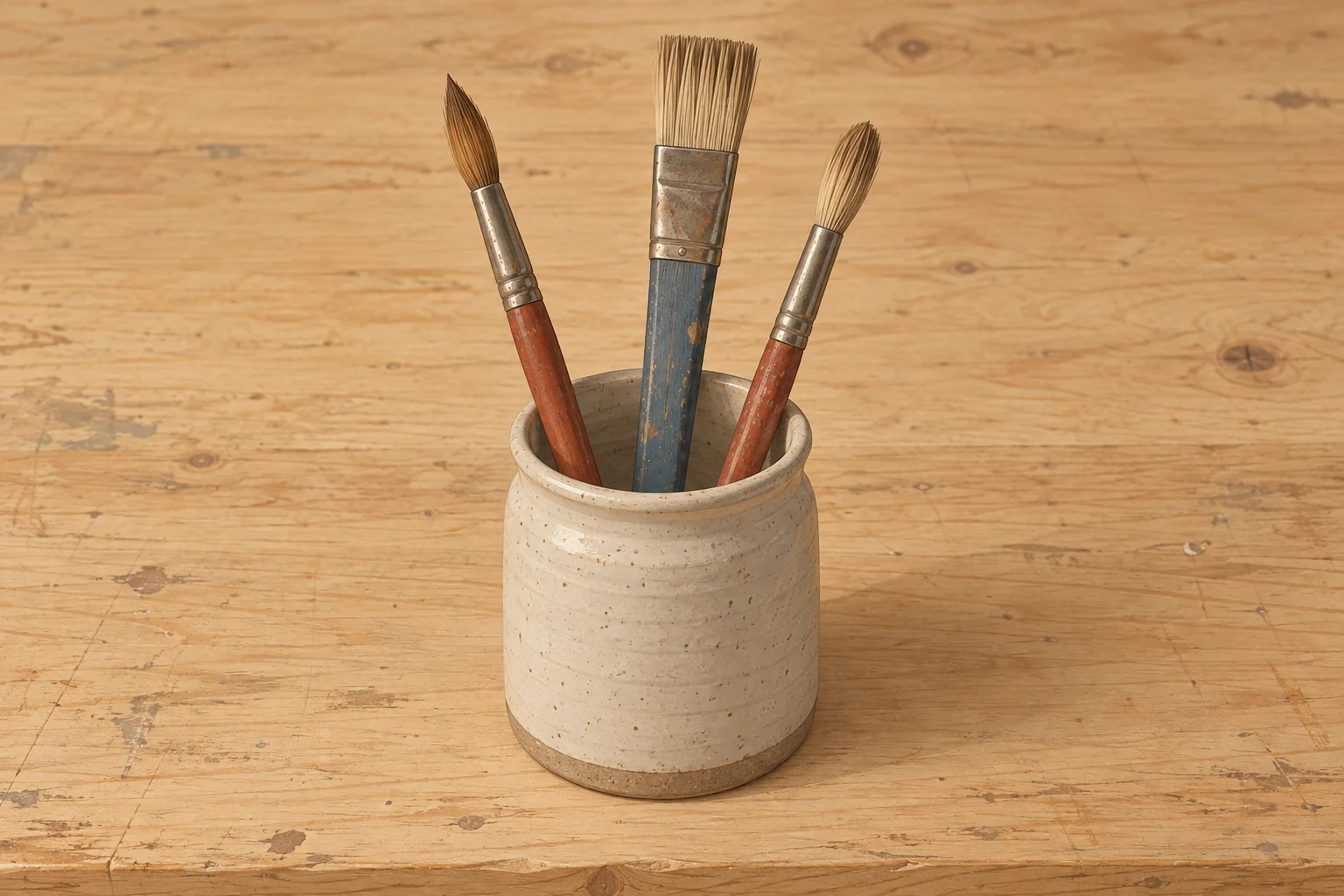
All Paintbrushes & Applicators articles from Hobby & Craft Made Clear.
Paintbrush head shapes determine how bristles contact a surface, how paint flows, and what mark geometry the tool can...
Read itBristle flagging — the split ends at a brush tip — mechanically divides a single stroke into dozens of narrow paint c...
Read itBristle stiffness determines how much paint a brush holds, how pressure distributes across a stroke, and when the loa...
Read itBristle flagging — the split ends on natural and some synthetic brush fibers — multiplies the number of paint-carryin...
Read itBristle flex determines how paint stored along a brush's filaments travels to the tip and transfers onto a surface du...
Read itContact adhesive bonds two surfaces by coating each one separately, allowing the solvent to evaporate, then pressing ...
Read itThe mechanics of paintbrush head shapes — how round, flat, and filbert profiles each distribute paint differently.
Read articleThe mechanics of a paintbrush ferrule — how it clamps and seals bristles to the handle under repeated use.
Read articleThe structural differences between natural and synthetic paintbrush bristles and how each affects paint pickup and release.
Read article